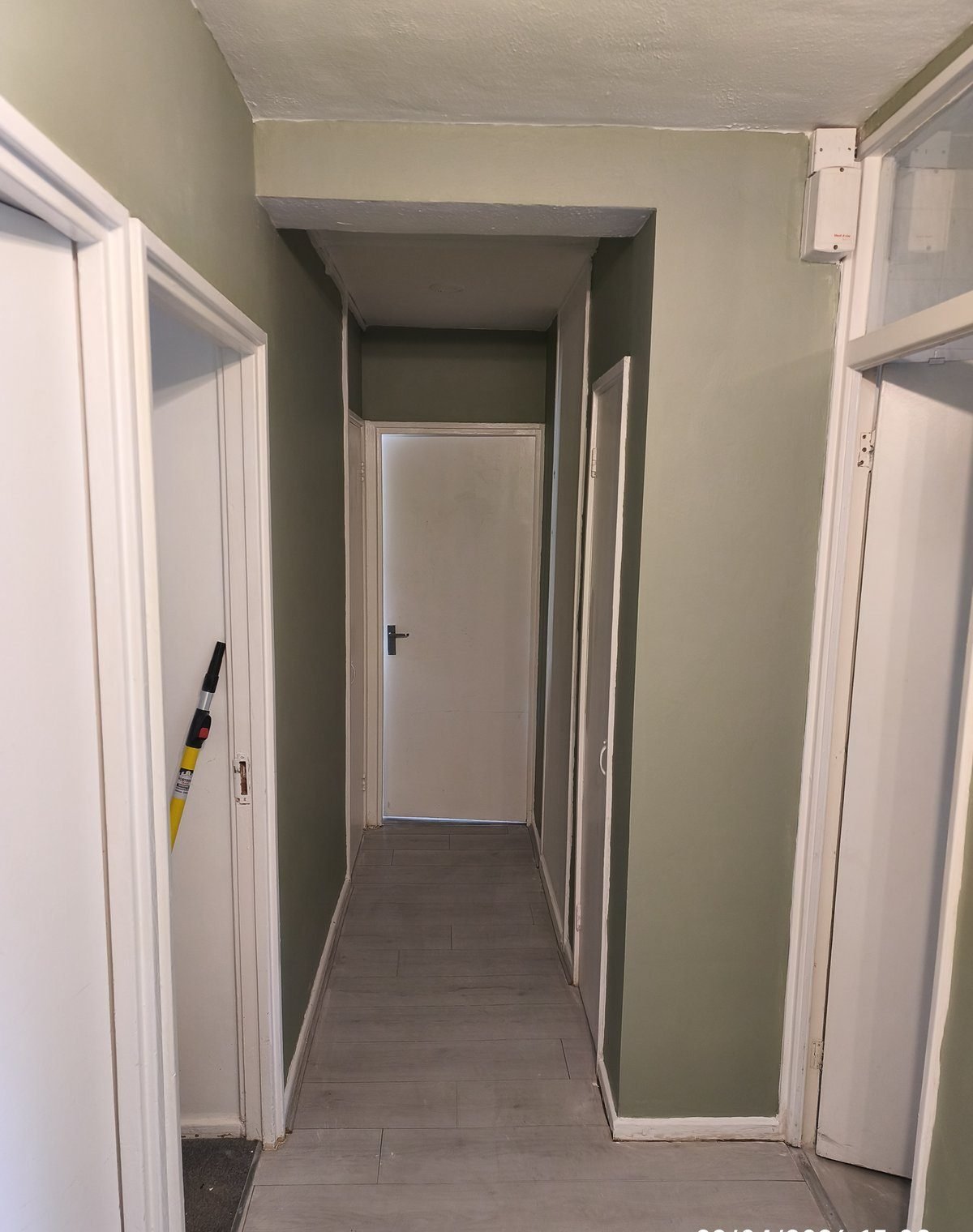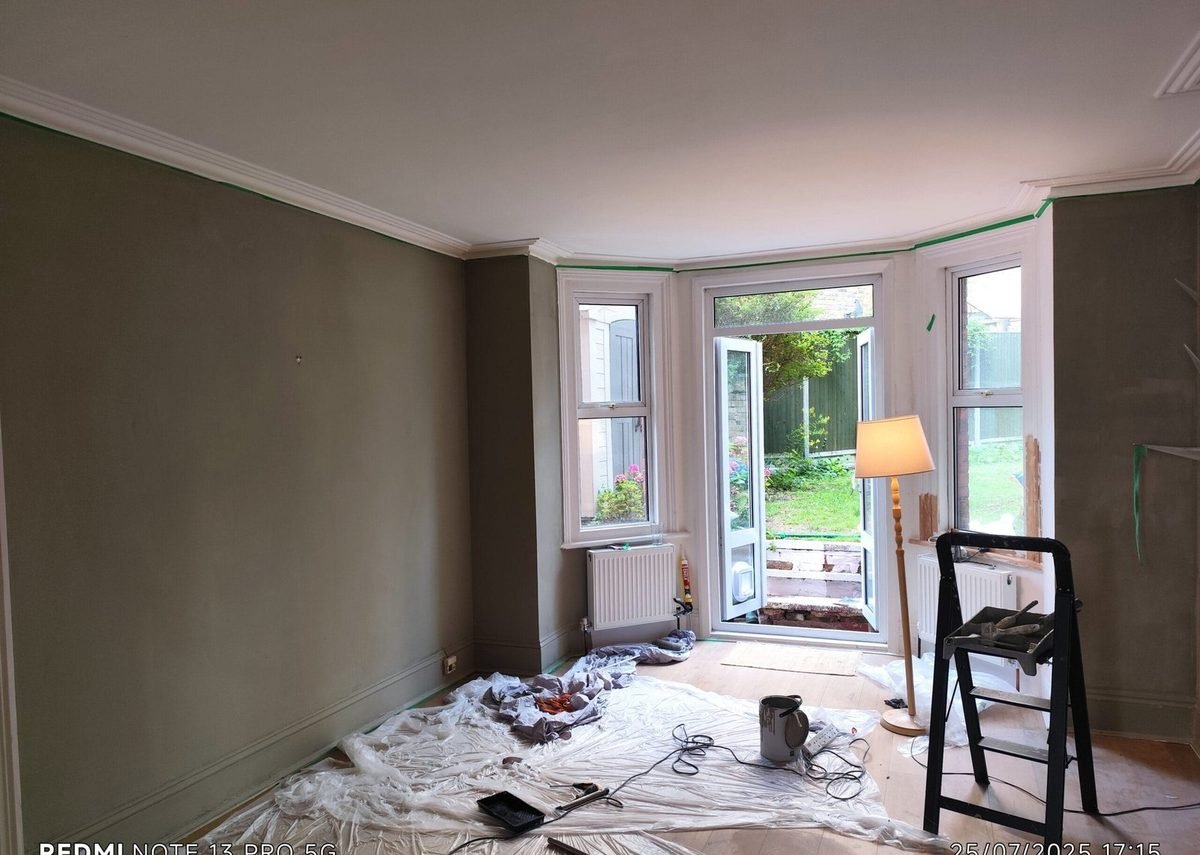
Hallways and staircases are the hardest-working spaces in any South London home. They take the brunt of daily life — muddy shoes, school bags, wet umbrellas, and constant traffic — yet they are usually the last areas to get attention when a redecorating job comes around. If your entrance hall is looking tired, scuffed or stained, here is how a local decorator approaches the job.
Why Hallways and Stairs Need a Different Approach
A bedroom might see two people walk through it twice a day. A hallway sees everyone, every day, often carrying things. That traffic means scuff marks, hand prints along the banister, and a build-up of grime around light switches and door frames. In the narrow Victorian terraces typical of SE17, Walworth, Kennington and Camberwell, hallways are also tight and dark, so any wear shows up immediately.
The solution is not simply to repaint more often — it is to choose the right products and preparation so the finish lasts years rather than months.
Choosing the Right Paint for High-Traffic Areas
In a hallway you want a finish that is washable, wipeable and tough. Matt emulsion, so popular in living rooms, marks far too easily in a stairwell. Instead we recommend:
- Walls: a durable mid-sheen or washable matt emulsion. These resist scuffs and can be wiped down with a damp cloth.
- Banister, spindles and handrail: water-based satin or eggshell for a hard, wipe-clean finish.
- Skirting boards and door frames: satin or gloss, which cope with knocks and cleaning far better than matt.
- Ceilings: a flat matt white to bounce light around and brighten narrow spaces.
If you have children or pets, consider going one step further and using a dedicated scrubbable finish on the lower half of the walls, where the worst of the damage happens.
Preparing Walls and Woodwork in Older London Homes
Preparation is where a professional job is won or lost. In period properties around Elephant & Castle, Bermondsey and Peckham we regularly find patched plaster, hairline cracks, and old gloss that has yellowed. Each of these needs treating before a brush is lifted.
We fill and sand cracks, sand back glossy woodwork to give the new paint a key, and spot-prime any bare plaster or stained patches. Skipping this stage is the single most common reason a hallway starts looking shabby again within a year.
Painting a Stairwell Safely
The stairwell itself is the tricky part. Getting a clean cut-in along a slanting stringer or a high ceiling without a ladder wobbling on the stairs takes experience. We use purpose-built stair ladders and platform steps, mask the treads carefully, and work top-down so no dust settles on fresh paint. Safety, not speed, is what matters on a staircase.
Colour Ideas for South London Hallways
Dark, narrow hallways benefit enormously from light, warm neutrals — soft off-whites, pale greys and warm stones all reflect light and make the space feel wider. Painting the ceiling and walls in closely related tones blurs the corners and adds height. If you want a little more character, a deep green or navy below a dado rail works beautifully in Kennington and Camberwell period homes, while the upper walls stay light.
Getting a Professional Finish
A hallway repaint is one of the most disruptive jobs to do yourself: ladders on stairs, drying paint in a walk-through space, and traffic resuming before the finish has cured. Hiring a decorator means proper prep, hard-wearing products, and a finish that stands up to real family life.
If your hallway, stairwell or landing is overdue a refresh, get in touch for a free, no-obligation quote — we cover SE17, Walworth, Kennington, Camberwell, Peckham, Brixton, Bermondsey and Elephant & Castle. Request your free quote here.