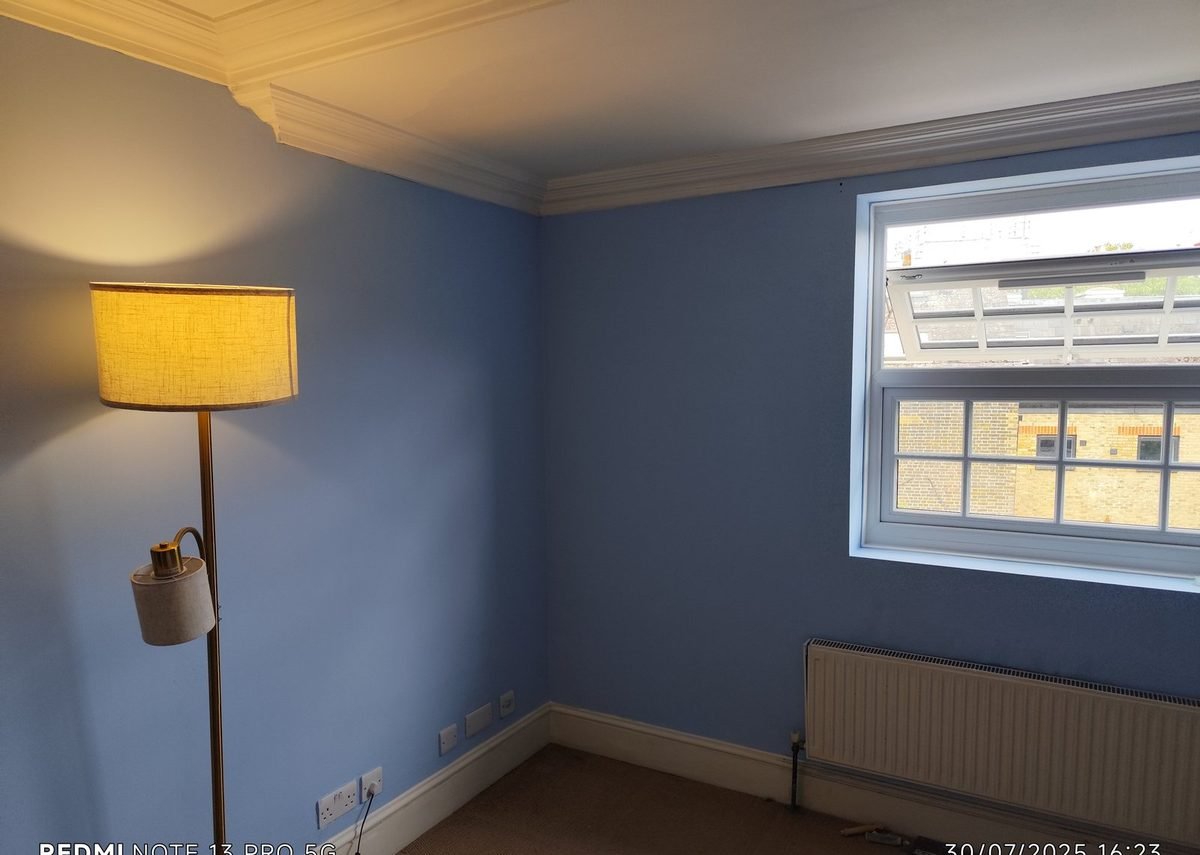
Skirting boards are the finishing touch that can make or break a freshly painted room. In the Victorian and Edwardian terraces that line the streets of SE17, Walworth and Kennington, original timber skirting is often characterful and ornate — and just as often the most neglected part of a redecoration. Paint it properly and the whole room looks crisp, finished and professionally done. Rush it, and brush marks, drips and yellowing paint are the first things anyone notices.
Whether you’re refreshing a flat near Elephant & Castle or a family home in Camberwell, this guide walks you through painting skirting boards and woodwork the way a professional decorator would — no masking-tape disasters required.
Why Skirting Boards Deserve More Attention
Skirting boards take more punishment than any other surface in your home. Vacuum cleaners, mop water, shoes, furniture and curious pets all take their toll. In older London properties they also absorb moisture from solid walls, which is why paint on skirting often fails long before the walls need touching up.
A properly prepared and painted skirting board does two jobs: it protects the timber and it frames the room. Crisp white — or carefully chosen — woodwork makes walls look straighter, ceilings higher and the overall finish far more polished. It’s something buyers, landlords and visitors notice instantly, which is why it matters so much in popular South London rental areas like Peckham and Bermondsey.
What You’ll Need
- Sugar soap and a cloth for cleaning
- Fine wood filler and a filling knife
- Sandpaper — 120 grit for flattening, 180 grit for finishing
- Water-based primer or undercoat
- Water-based satin or eggshell for the topcoat
- A good 2-inch angled brush (plus a small sash brush for ornate mouldings)
- Dust sheets and a dusting brush
Step 1: Clean, Sand and Fill
Ninety percent of a great skirting board job happens before the paint tin opens. Wash the boards down with sugar soap to remove grease and grime — this is the step most DIYers skip, and it’s exactly why paint peels later. Sand with 120 grit to knock back the old gloss and smooth out imperfections, fill any cracks and dents with fine wood filler, then sand again with 180 grit. Wipe away all the dust before you reach for the primer.
Step 2: Always Prime First
Bare timber and old knotty wood must be primed before any topcoat goes on. If you’re painting over a dark colour — common in older London homes where decades of paint have built up — use a stain-blocking primer to stop bleed-through. It’s tempting to skip priming to save time, but the topcoat will sink unevenly into the timber and every brushstroke will show.
Step 3: Cut In and Lay Off for a Flawless Finish
Load the brush about a third of the way up the bristles, tap off the excess and cut in along the top edge where the skirting meets the wall. Work in long, even strokes in one direction, then “lay off” lightly over the wet paint to smooth out any brush marks. Two thin coats always beat one thick coat — thick paint sags, drips and takes forever to dry.
For ornate Victorian mouldings in homes across Walworth, Camberwell and Brixton, use a smaller brush and don’t overload the detailing. Paint pooled in carved grooves looks messy and is a nightmare to fix once dry.
Skirting Board Colour Ideas for London Homes
Classic white or off-white suits most interiors, but in bedrooms and hallways a warm off-white or greige creates a calmer, softer look. Dark, dramatic skirting is one of the biggest trends of 2026 — deep green or charcoal boards against pale walls give both Edwardian and new-build rooms a modern edge. Whatever you choose, stick with satin or eggshell: they’re durable, wipeable and far more forgiving than gloss.
DIY or Call a Professional Decorator?
Painting the skirting in one or two rooms is a satisfying weekend project. But if you’re redecorating a whole flat — or your home has high ceilings, ornate cornicing and fiddly staircases, as so many properties around Kennington, Elephant & Castle and the rest of SE17 do — a professional will get it done faster and with a finish that lasts for years.
Ready to Hand It Over?
I’m Paolo, a painter and decorator serving SE17, Walworth, Kennington, Camberwell, Peckham, Brixton, Bermondsey and Elephant & Castle. Whether it’s a single room or a full-house redecoration, I’ll prep, prime and paint your woodwork to a finish that lasts. Get in touch for a free, no-obligation quote — I’d love to help with your next project.