Finding a painter in London is easy. Finding one who will prepare the surfaces properly, give you a realistic quote and leave you with a finish you are genuinely happy with is a different matter.
Whether you need one bedroom painted, a whole flat refreshed or a property prepared for new tenants, the cheapest quote is not necessarily the cheapest job.
Here is what I recommend checking before you hire anyone.
1. Look at their actual work
A painter can tell you they are experienced. Their recent work will tell you much more.
Ask to see photographs of completed jobs, preferably work similar to yours. Look for:
- Clean, straight edges around ceilings and woodwork
- Even coverage without visible roller marks
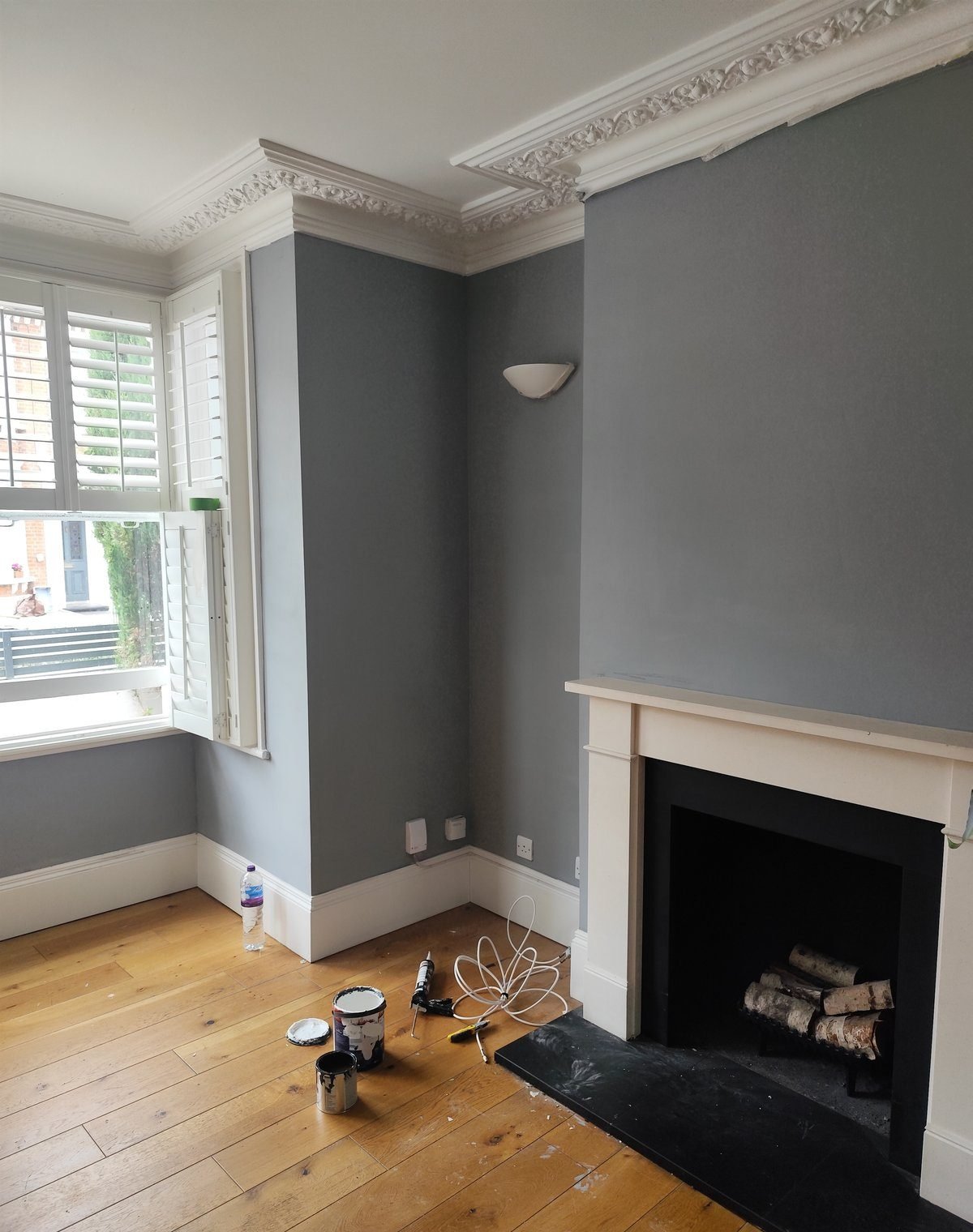
- Proper preparation around cracks and damaged areas
- Smooth repairs rather than simply painting over defects
- Clean finishes around skirting boards, doors and frames
- Consistent coverage in corners and difficult areas
Before-and-after photographs can be particularly useful because they show whether the painter is actually doing preparation work or simply applying paint to already-good surfaces.
2. Ask what preparation is included
This is one of the most important questions you can ask.
“Painting the walls†can mean very different things.
A professional job may involve:
- Filling holes and cracks
- Sanding repairs
- Removing loose or flaking paint
- Caulking gaps where appropriate
- Repairing damaged plaster
- Spot-priming repairs
- Preparing previously painted surfaces
- Protecting floors and furniture
If one painter quotes £300 and another quotes £500, don’t immediately assume the second painter is expensive.
Ask both what is included.
A low quotation can become expensive if preparation is excluded and every repair becomes an additional charge.
3. Make sure the quotation describes the job
A good quotation should make it reasonably clear what you are paying for.
For example:
Included
- Two bedrooms
- Walls and ceilings
- Two coats of emulsion
- Skirting boards
- Filling minor holes and surface imperfections
- Preparation and sanding
- Protection of floors and furniture
Not included
- Major plaster repairs
- Wallpaper removal
- Door painting
- Significant water damage
- Extensive skimming
The exact scope will depend on the property, but the principle is simple: both sides should understand what is included before work begins.
4. Don’t compare prices without comparing the scope
Getting two or three quotations can be useful, but make sure you are comparing like with like.
One painter might include two coats, extensive preparation and woodwork.
Another might be pricing for one coat with minimal preparation.
The numbers may look very different, but you aren’t actually comparing the same service.
Ask:
“Exactly what preparation and painting are included in your price?â€
That question can tell you more than asking, “What’s your hourly rate?â€
5. Check recent reviews — but read them properly
A five-star rating is useful, but don’t stop there.
Read what customers actually say.
For a painter and decorator, I would look for comments about:
- Quality of the finish
- Preparation
- Reliability
- Communication
- Tidiness
- Attention to detail
- Whether the painter finished when promised
Recent reviews are particularly useful because they tell you how the business is performing now rather than several years ago.
6. Ask about insurance
For professional painting and decorating work, ask whether the contractor has appropriate public liability insurance.
You don’t need to turn the process into an interrogation. A straightforward question is enough:
“Do you have public liability insurance?â€
A professional should be comfortable answering it.
7. Be realistic about the timetable
Painting a room isn’t simply a matter of putting paint on four walls.
Preparation takes time.
Filler needs to dry. Repairs may need sanding. Some surfaces need primer. Multiple coats may be required. Woodwork can require several stages.
If someone tells you they can completely transform a badly prepared three-bedroom flat in an unrealistically short period, ask how they intend to achieve it.
Speed is useful.
Rushing preparation is not.
8. Don’t automatically choose the cheapest painter
Price matters. But it should be considered alongside quality and scope.
Imagine you receive three quotations:
- £900 — minimal preparation
- £1,250 — proper preparation and two coats
- £1,700 — extensive preparation, repairs and premium materials
The middle quotation could easily be the best value.
The right question isn’t:
“Who is cheapest?â€
It is:
“What am I getting for the money?â€
9. Tell the painter about problems before they quote
If your walls have cracks, damp staining, peeling paint, damaged plaster or previous poor repairs, mention them.
Better still, send photographs before the quotation.
A painter can then arrive with a better understanding of the work involved and produce a more realistic estimate.
This also reduces the chance of disagreements later.
10. Ask who supplies the paint and materials
Clarify this before work starts.
Some painters include paint in their quotation. Others charge labour only and ask the customer to supply the paint.
Neither approach is necessarily better.
What matters is that everyone knows what has been agreed.
If you are supplying the paint, ask the painter what type and quantity is required before buying it.
11. Look at the painter’s own website
An established painter should ideally have somewhere you can see their work, services and contact details.
A website doesn’t automatically mean somebody is a good painter, but it gives you another opportunity to check:
- Recent projects
- Customer reviews
- Areas covered
- Services offered
- Before-and-after photographs
- How professionally they communicate
The more information you can verify before hiring someone, the better.
12. Trust your impression after meeting them
For larger jobs, meeting the painter at the property can tell you a lot.
Does the person listen?
Do they ask sensible questions?
Do they notice the condition of the walls?
Do they explain what needs doing?
Do they give you a realistic idea of the work involved?
A good painter should be interested in the condition of the property, not just the number of rooms.
What should you expect from a good painter?
There isn’t one perfect way to run a painting business, but I would expect a professional painter to:
- Communicate clearly
- Turn up when agreed
- Protect the property
- Prepare surfaces properly
- Use suitable materials
- Keep the work area reasonably tidy
- Explain anything outside the original scope
- Take pride in the final finish
The difference between an average paint job and a professional one is often not the paint itself.
It is the preparation and attention to detail underneath it.
Should you use a platform or contact a painter directly?
There are several ways to find a painter in London: recommendations from friends, Google searches, local businesses, trade directories and online marketplaces.
The method you use matters less than the person you eventually hire.
Don’t choose somebody simply because they are the first person who replies or because they have the lowest price.
Look at their recent work, reviews, insurance, communication and — most importantly — exactly what they intend to do for the money they are charging.
Need a painter in London?
I provide painting and decorating services across South London and Greater London, from individual rooms and hallways to complete flats and larger residential projects.
If you are unsure what your property needs, send me photographs or arrange a quotation. I can assess the condition of the surfaces and explain what I would recommend before you decide whether to proceed.