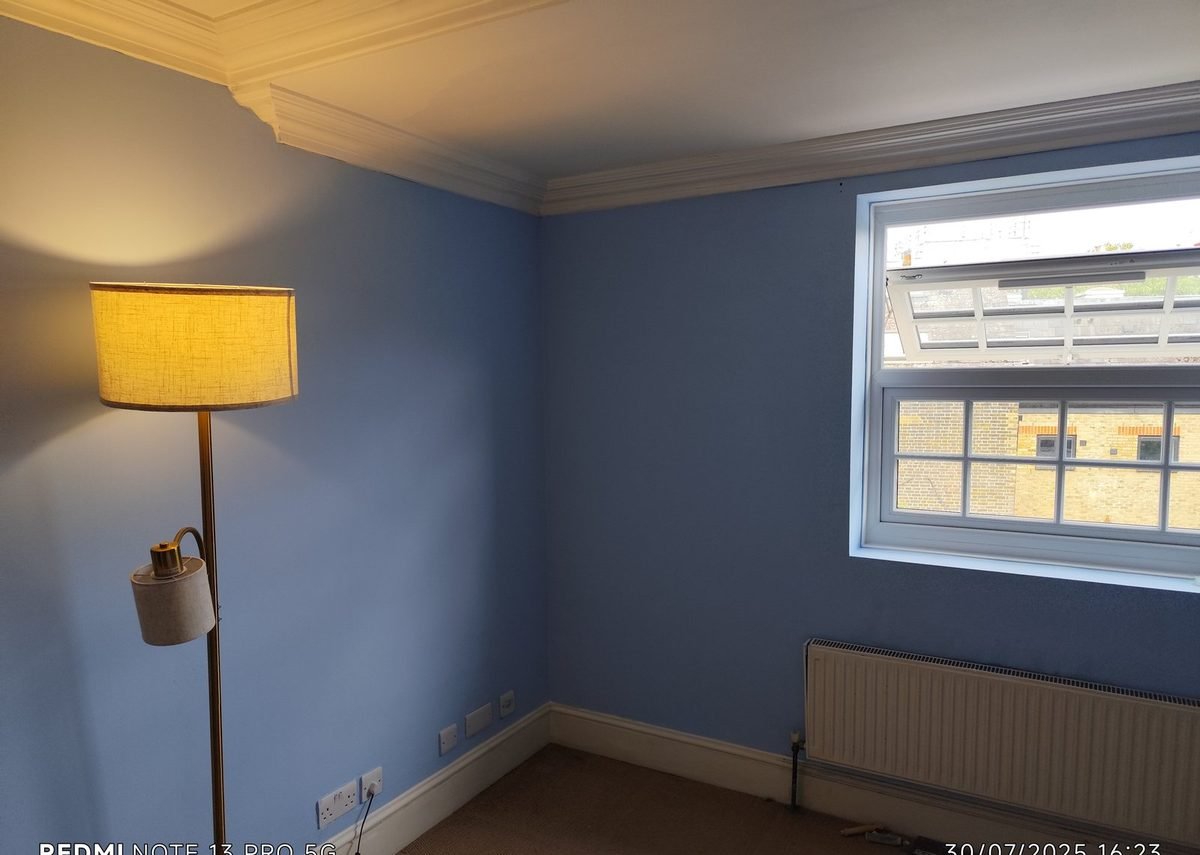
If you are painting a room in your London flat or house, how you prepare the walls matters more than the paint you choose. A professional finish is 80% preparation and 20% painting. Rushing this stage is why DIY paint jobs often look patchy, rough, or start peeling within months. This guide walks through every step of wall preparation so your paint job lasts and looks professional.
Tools You Will Need
Having the right tools before you start makes the job faster and the finish better. Here is what I recommend for a standard room repaint:
- Filling knife (medium and small) — essential for applying filler smoothly
- Fine surface filler (e.g. Toupret or Polyfilla) — use this for filling holes and cracks
- Paint brushes set — a good set of brushes for cutting in around edges and precision work
- Sandpaper: medium (120-grit) and fine (180-grit)
- Sanding block or pole sander — makes sanding faster and more comfortable
- Dust sheets to protect floors and furniture
- Bucket, sponge, and sugar soap or mild detergent for cleaning walls
- Primer or mist coat (for new plaster or bare walls)
- Painter tape / masking tape — for sharp edges around skirting and frames
- Caulk and caulking gun — for filling gaps between walls and woodwork
Step 1: Clear the Room and Protect Surfaces
Move furniture to the centre of the room and cover it with dust sheets. Remove curtain poles, light fittings where possible, and switch and socket covers. Tape polythene over any fixtures you cannot remove. Cover the floor with dust sheets or heavy-duty paper. In London flats, space is often tight. If you cannot fully move furniture, push it together and cover with multiple sheets. Paint dust gets everywhere, so do not skimp on protection.
Step 2: Clean the Walls
Walls collect grease, dust, and grime over time, especially in kitchens and hallways. Wash them down with warm water and sugar soap or a mild detergent. Pay extra attention to areas around light switches and door frames where hand grease builds up. Rinse with clean water and let the walls dry completely. This usually takes 2 to 4 hours depending on ventilation. Painting over dirty walls causes poor adhesion and an uneven finish, so do not skip this step.
Step 3: Fill Holes, Cracks, and Dents
Inspect every wall closely. Look for nail holes from old shelves or pictures, hairline cracks along cornices and wall joints, dents from furniture or doors, and gaps where skirting boards meet the wall. Use a medium filling knife to apply fine surface filler. Press it firmly into the hole or crack, then scrape away the excess in one smooth motion. Let it dry according to the filler instructions. For larger holes over 5mm, use expanding foam filler or fill in layers, letting each layer dry before adding the next.
Step 4: Sand the Walls Smooth
Once filler is dry, sand each filled area with medium-grit sandpaper wrapped around a sanding block. Sand in a circular motion until the surface is flush with the wall. Then switch to fine-grit for a smooth finish. For full-wall sanding, use a pole sander with fine-grit paper. This knocks back the surface and helps new paint bond properly. Wear a dust mask. Sanding creates fine dust that is irritating to breathe, so open windows for ventilation.
Step 5: Remove Dust
After sanding, wipe every wall down with a damp cloth or tack cloth. Pay attention to the tops of skirting boards, window sills, and corners. Any dust left behind will show through the paint as bumps or rough patches. Vacuum the floor and let the room settle for 30 minutes before moving to the next step.
Step 6: Prime if Needed
You need primer if the wall is new plaster, you are painting over dark colours with light paint, the wall has stains or patches, or you are painting over a gloss or silk finish. For most repaints in London flats, a single coat of good-quality emulsion acts as both primer and first coat. But if the walls have repairs, spot-prime them first with a thin coat of the paint you will use.
Step 7: Caulk Gaps and Edges
Before painting, run a bead of caulk along the gap where the wall meets skirting boards, architraves, and window frames. Smooth it with a wet finger or caulking tool. This gives that crisp, professional line that makes a room look finished. Do not skip this step. Clean lines at edges and trims are what separate a professional job from an amateur one.
Common London Wall Issues
Older London properties come with specific wall challenges. Victorian and Edwardian conversions often have lime plaster walls that need breathable paint, not standard emulsion. Using modern paint on lime plaster can trap moisture and cause peeling. If you have damp patches, never paint over them. Fix the source of the damp first, then treat the wall with a stain-blocking primer. Artex or textured walls are common in 1970s and 80s London flats. Skim-coating is the best solution, but thorough sanding and multiple coats of thick emulsion can work too. High ceilings are common in Victorian conversions. Use an extension pole for sanding and a roller with an extension handle.
When to Call a Professional
If your London flat has multiple rooms, high ceilings, or walls in poor condition, hiring a professional painter can save you time and frustration. Professional preparation includes all the steps above, done efficiently with the right tools and experience. Paolo offers professional wall preparation and painting services across Brixton, Peckham, Camberwell, and all South London areas. Fixed quotes, no surprises. Get a free quote here.